Karyn Nakamura is an Artist and Engineer
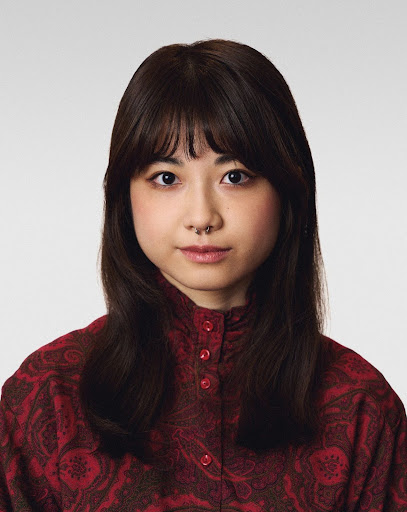
Karyn Nakamura is an artist and engineer with a Bachelor of Science in Art and Design from MIT. She is part of the Applied Experiment cohort of 2025, together with Wendi Yan.
This interview was conducted by Andrew Trousdale on behalf of APOSSIBLE.
Andrew
What is a ritual, practice, or routine in your life that is important for your psychological wellbeing and/or fulfillment? Why?
Karyn
Regularly throwing myself into something entirely new - a tool, an environment, a context, is a ritual that grounds me (Karyn). There’s something deeply thrilling about diving into the deep end with more questions than I am aware of, testing what knowledge or intuition might carry over, and navigating the disorientation of starting from scratch. Whether it’s a piece of hardware I’ve never touched, an ambitious build, being surrounded by capable people, or generally being well outside my comfort zone, I find clarity and freedom in the friction of not knowing.
This ritual keeps me in motion - curious and humble at the edge of what I thought I understood. It reminds me of how delightfully flexible knowledge is and how it recomposes itself in new situations. It teaches me to stay awake to the complexity of the world and to the shifting shape of myself within it.
Andrew
What is a human-made creation that brings out the best in you? Why?
Karyn
Node-based programming tools unlocked communication for me. I had never really felt comfortable with language, but these tools allow me to craft a language of my own, not bound by existing grammar and syntax but shaped by my own logic, structure, and spatial intuition. They let me lay out my thoughts like architecture, manipulate representations fluidly, and solve the puzzles of bringing an idea into being, not by following a single fixed path, but by exploring many. And I can return to what I’ve built, navigate through it, and appreciate the system itself: its form, its decisions, its unique coherence. It has cultivated a deep appreciation in me for the systems we build and the ways they trace the evolving contours of our understanding.
Andrew
When do you cherish the slow or hard way of doing something? Why?
Karyn
Wendi and I share a love for piecing together creative artifacts and research from disparate sources of information spanning disciplines, media, and eras. From working with cutting-edge digital tools to half-broken hardware salvaged from 50 years ago, we find joy in approaching the process with patience and care. Creation is not merely about reaching a destination, but a ritual of countless decisions through which we craft worlds of our own.
As humans, we each carry a fragmented, deeply personal pool of information shaped by memory, experience, and idiosyncratic references that drives us to create. Unlike computational marvels that evenly tap into vast datasets, our uniqueness is precisely in our limitations. We know so little; our creations are so particular. The friction we encounter, whether molding a virtual model or weaving together a piece of software is the moment our limitations take form and meaning. When we engage with artifacts created by others, we feel this trace of another mind trying, with imperfect tools, to bring an interior vision into the shared world.
Andrew
What is something you appreciate or long for from the past? Why?
Karyn
Chinese and Japanese language mechanical typewriters. Today, most of us type on our computers using the same Latin keyboard, but a hundred years ago, differences in writing systems posed concrete challenges to the accessibility of communication. In order to invent these typewriters, engineers of the past deconstructed writing systems into radicals and common components, devised rules to pack them compactly into physical trays, and engineered mechanisms that allowed for rapid indexing so people could elegantly compose characters and prose. They are feats of engineering and creativity and illuminate the many roads paved over in the history of a technology before it reaches what may seem obvious today. They are a beautiful reminder, urging us to resist letting convenience flatten the worlds our many languages hold.
This is part of our Interview Series. Join our newsletter to receive updates weekly by email.