Gemma Copeland is a Designer, Researcher and Educator
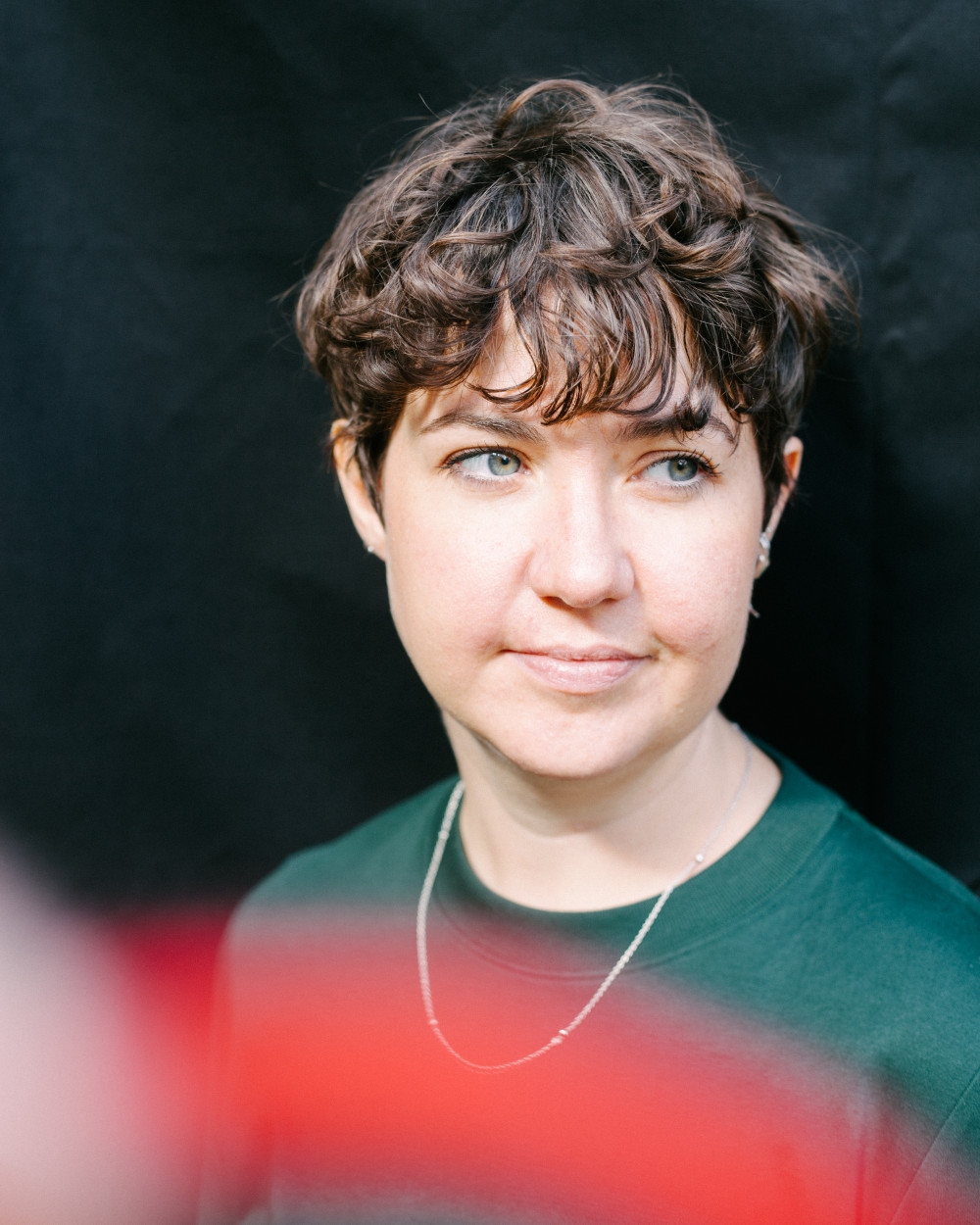
Gemma Copeland is a designer, researcher, organiser and educator based in London. She's also a founding member of Common Knowledge.
This interview was conducted by Bryan Wolff on behalf of APOSSIBLE.
Bryan
What is a ritual, practice, or routine in your life that is important for your psychological wellbeing and/or fulfillment? Why?
Gemma
In my personal life, each day and week looks quite different to the next. I don't stick to routines for long — I prefer variation and surprise over consistent habits. In my worker cooperative, however, we have many rituals and practices which we've collectively shaped and reshaped over the past six years of working together. Our work follows a cyclical rhythm: weeks, months, seasons and years that begin with planning and end with reflection. These cycles create space for us to continuously reflect, learn and iterate on our practices.
One simple ritual is that we meet every day at 10am to check in. It's just a short meeting where we each share honestly how we're feeling, what we're working on and what we need from each other. I find this ritual really grounds me for the day. It provides just enough regularity and structure, even if the rest of the work day looks very different from the last. It reminds me that, no matter what fresh horrors unfold in the news cycle, that I'm part of something bigger than myself and I have people I can rely on.
As adrienne maree brown says: move at the speed of trust.
Bryan
What is a human-made creation that brings out the best in you? Why?
Gemma
I have a small wooden loom for weaving. I enjoy using this because it's an analogue practice, creative in a different way to my usual work. Weaving is tactile, intuitive and emergent. I don't plan my weavings beforehand, I just select certain colours and textures of wool and see where they take me, building the piece from the bottom up.
The process of weaving is repetitive — the basic technique is to weave the weft thread under and then over each warp thread — but still requires focus and mindfulness. For me, active mindfulness works better than sitting to meditate. I need to be doing something with my hands or else my mind wanders.
From this simple technique, endless variations emerge — intricate patterns or abstract blends of colour and texture. It's a forgiving medium: if you make a mistake, you can simply undo the threads and try again. For me, weaving is pure, abstract aesthetic expression. I love to see how colours and textures look together.
I'm particularly interested in weaving as a practice because it connects me to a longer political and technological lineage. First, the Luddites — a movement that I find endlessly fascinating. The Luddites were skilled textile workers, many of them weavers, who didn't oppose technology per se but the way that factory owners used it to consolidate power and degrade their quality of life.
At the other end of this thread is Ada Lovelace, born at the height of the Luddite uprisings. A few decades later, inspired by the jacquard loom’s punchcard system, she imagined machines with the capacity to be programmed — an early vision of computing that extended far beyond mathematical calculation. She stands at the origin point of a field that would later become aggressively patriarchal.
Weaving sits at the intersection of these histories: a practice gendered as feminine and thus devalued, yet foundational to both resistance and innovation, collectivity and computation. It reminds me that technologies aren't neutral; they encode the values and power structures behind them. And that craft — slow, intuitive, relational — can be a form of feminist refusal as much as creation.
It reminds me that technologies aren't neutral; they encode the values and power structures behind them.
Bryan
When do you cherish the slow or hard way of doing something? Why?
Gemma
Moving slowly doesn't come naturally to me. Time is such a precious resource, I never want to feel like I'm wasting it. Working on political projects can often feel like everything is urgent, there is more work to do and never enough time or money or resources to do it properly.
That being said, one area where moving slowly is important is building relationships. It takes time to build trust, be in conversation, navigate disagreements and find common ground. You can't rush it. As adrienne maree brown says: move at the speed of trust. I've found the best way to approach collective practice is with a gardener mindset: planting and tending, building and maintaining, establishing relationships and practices and then giving them the time and space to grow.
Bryan
What is something you appreciate or long for from the past? Why?
Gemma
I was lucky to spend some time travelling in Japan last year, and one of the highlights was visiting sentos and onsens. This kind of communal bathing used to be much more common throughout Europe and Asia. Bathhouses were convivial spaces where people would spend long hours socialising and relaxing, a form of social infrastructure.
Spending time in these onsens felt so luxurious and abundant, but not in a consumer sense. They are cheap, accessible and unhurried: a reminder that health and happiness doesn't have to be individualised or expensive. For me, they are a clear example of what degrowth thinkers mean by public luxury and private sufficiency: the idea that a good life doesn’t require high consumption, but it does require systems built around collective needs.
Capitalist realism tells us that "there is no alternative": that public space is inefficient, that care is an individual responsibility, that rest must be earned. Bathhouses like these undermine this logic, giving us a glimpse of how we could live together if we slowed down, worked less and cared for the commons. This kind of public infrastructure isn't a utopian fantasy — it exists, or has existed, in many places already.
This is part of our Interview Series. Join our newsletter to receive updates weekly by email.