sync : mirror
Project AE-005: synchronizing bodies across oceans.
For our fourth Applied Experiment, artist Lisa Jamhoury continues a decades long tradition of telematic performance, bringing our bodies online for a deeper connection across networks.
Watch the full film here:
Commonly, being online is being a brain hunched over a desk, or a phone. As AI comes into everyday life, we’re spending even more time talking with just our computers. But what if there was a latent dimension of virtual space? One that would let us move, truly move, in harmony.

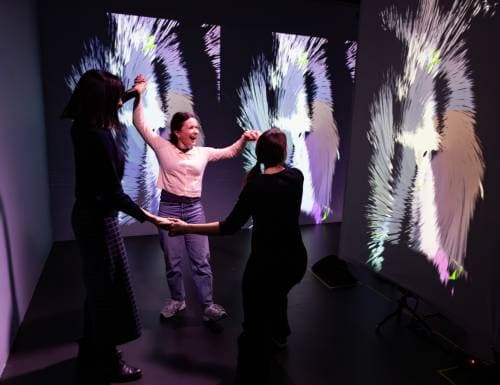
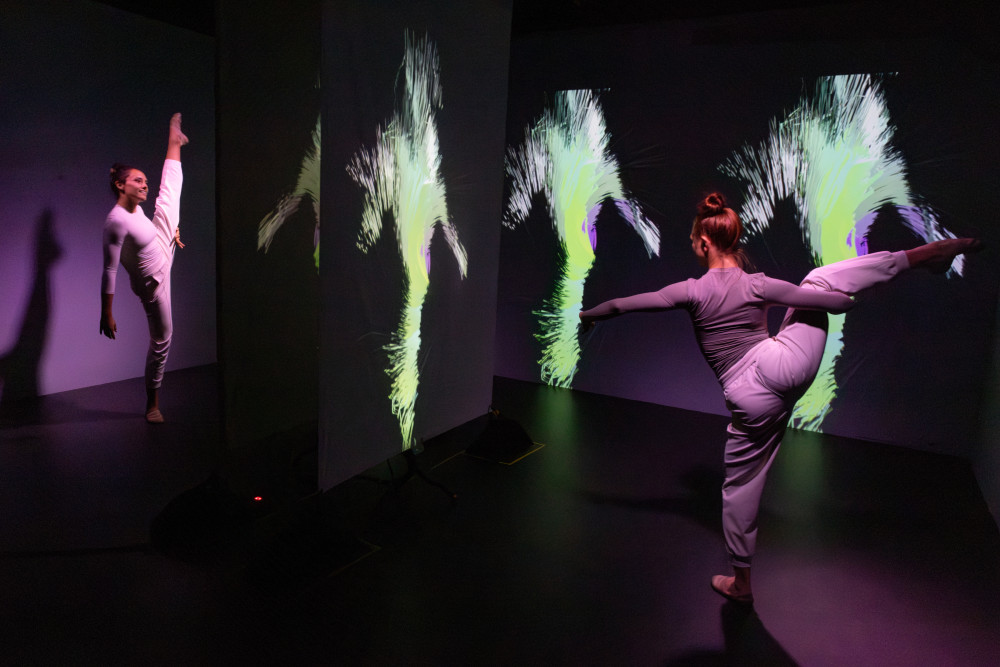
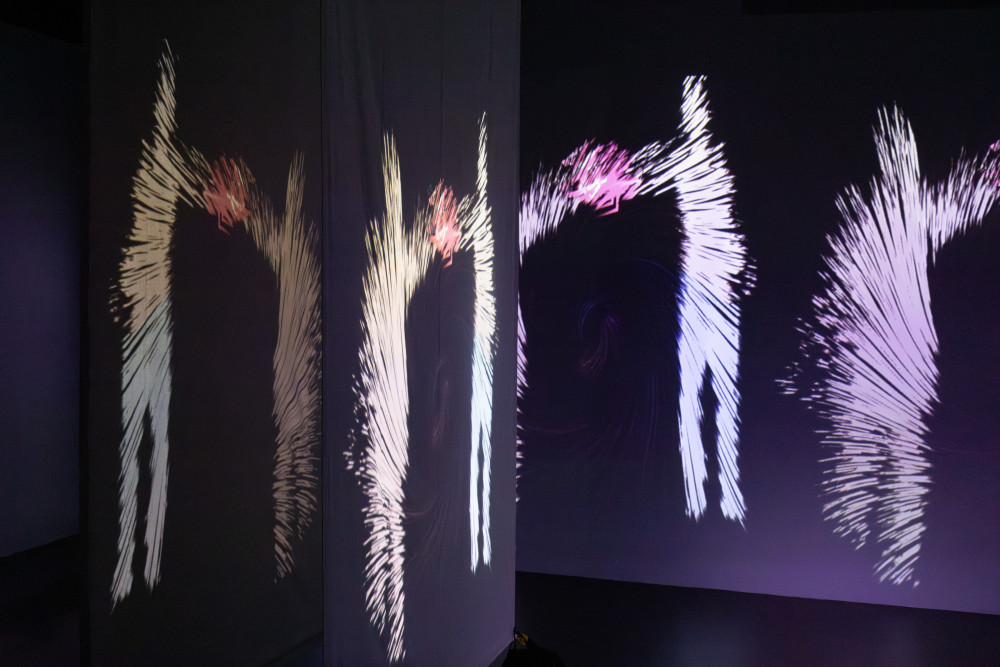
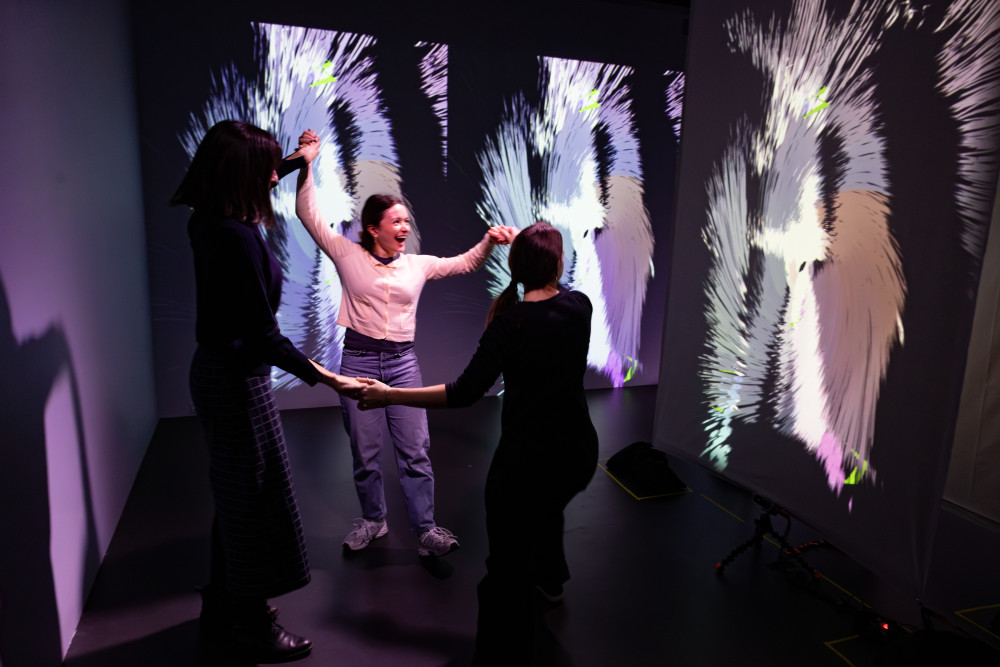
sync : mirror is an installation that lets people meet in virtual space with their full body.
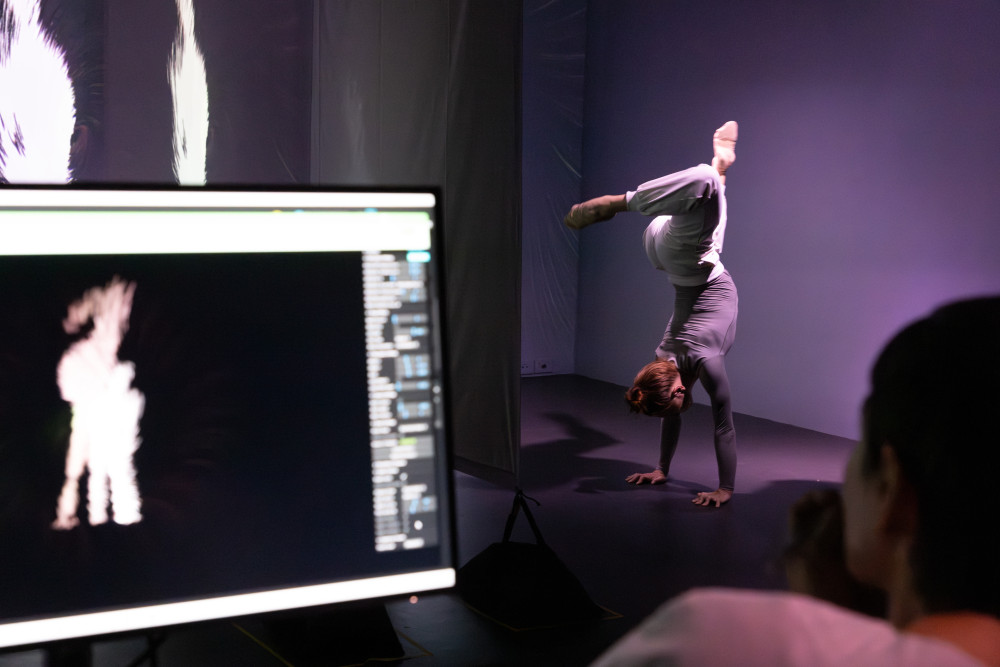
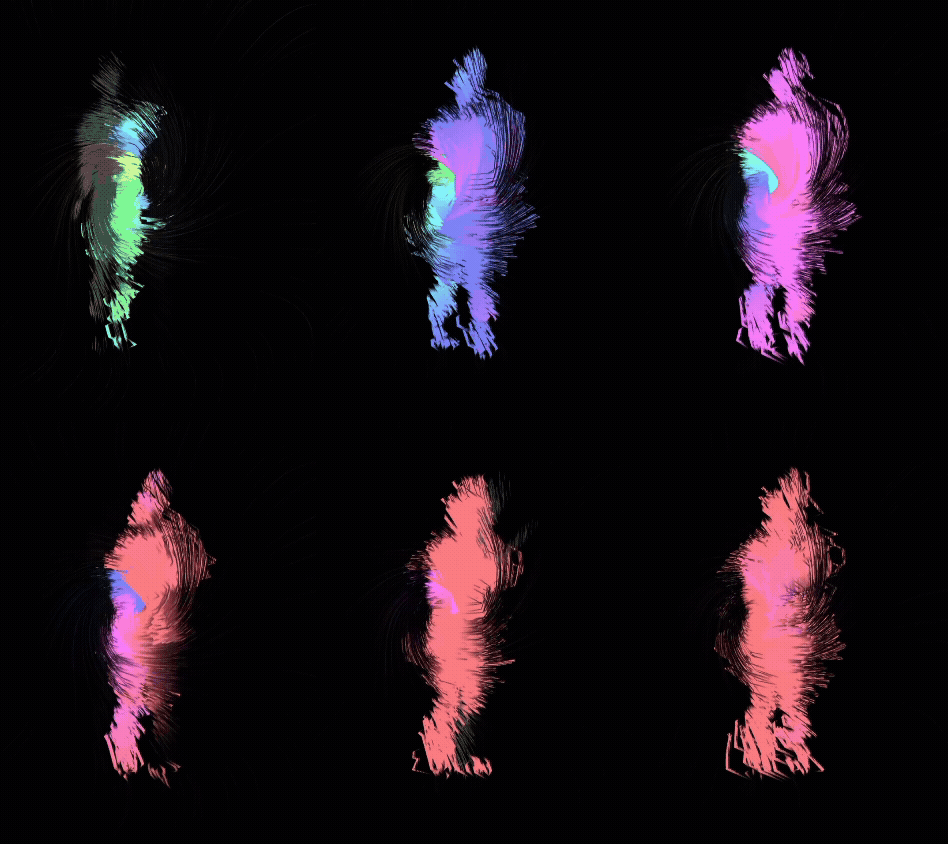
Featuring networked depth cameras, sync:mirror is made for two or more people. The body is being tracked in 3D, with their movements creating visual and sonic cues to get closer in sync.
The work is built to run across networks; each side of the mirror can be in a different part of the world.
With sync : mirror Lisa Jamhoury is really drawing on the work of Kit Galloway and Sherry Rabinowitz. They were a duo and were working with early broadcast satellites, sending signals of dancers across the country. Here, Lisa extends those ideas, mimicking a little bit of what it is to be in physical space with someone, while also exploring what is only possible in virtual space.
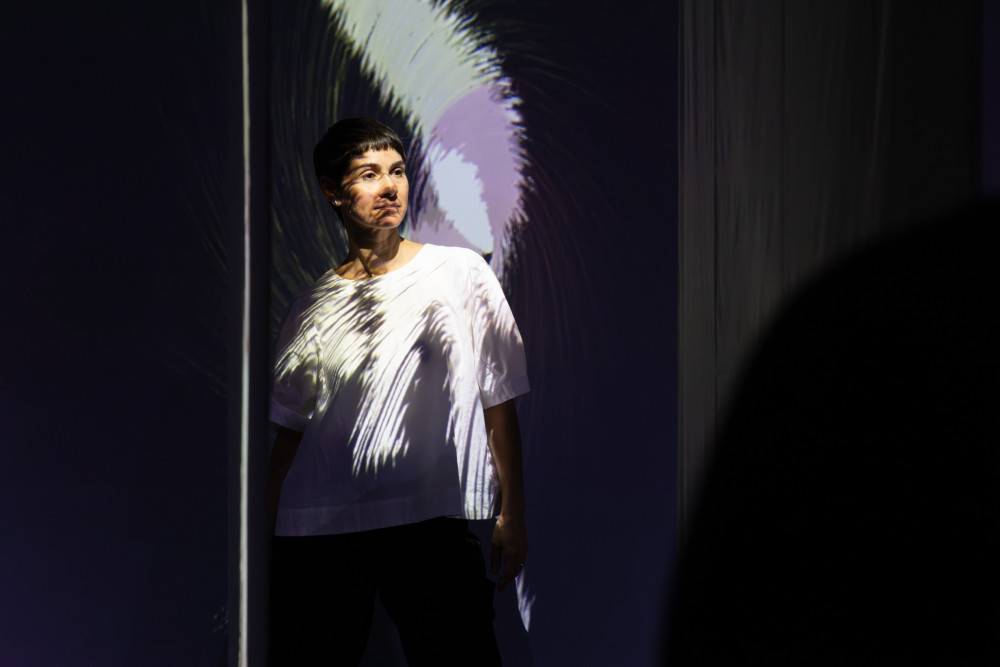
“Being in sync with someone is being in flowstate. I know it sounds very simple, but it's actually something we don't do that often, right?”
As Lisa explains: “In our current enlightenment era, we've gotten really obsessed with, "I think, therefore I am." But actually, our mind, our brains, our part of our bodies, and the less that we're in our bodies, the more we're moving away from being present in our own relationships. Getting back into the body is a way that we begin to move toward our full potential.”
For hundreds of thousands of years we were living through our physical bodies and now in the past few decades we're now living through our digital bodies. We're learning what this is because we're really building the new frontier of what it means to be a human and what it means to have a body.
Related Research
APOSSIBLE is interested in the potential of bringing our bodies back into our digital lives. Computers today are largely an interface with our mind, not our whole body. They thereby reinforce a sense of division between our minds and our bodies. But as Merleau-Ponty argued in Phenomenology of Perception, our consciousness emerges through the living body's active engagement with the world. Embodiment is a vital element of experience that our increasingly digital lives neglect.
Sync : mirror asks two things of users: first, to reconnect with their embodied existence, and second, to use this embodied awareness to connect more deeply with others. A growing body of research shows that moving in sync with others is one of the most ancient and reliable ways humans bond.
Wiltermuth and Heath demonstrate that people who move together cooperate more and sacrifice more for the group. And Suzanne Dikker's neuroscience research reveals that people's brainwaves literally synchronize during shared attention — a neural signature of connection that sync : mirror seeks to foster across networks. Where most digital tools flatten our expression to text and image, sync : mirror asks what becomes possible when we bring our full bodies online.
For more theoretical and practical references, explore all of sync : mirror's connections below.
-
Created by
-
VFX by
-
Sound Artist
-
Interaction Development
Lisa Jamhoury
-
Sound Implementation
Lisa Jamhoury
-
Producer
-
Choreography and Performance
-
Film direction
-
Cinematography
-
Editing
-
Technical Production
Astro Lee
Nicole Wong -
Photography
-
Made possible with support from
APOSSIBLE
Onassis ONX
This project is part of our Applied Experiments program where we directly support practitioners to create projects.
Connections
- Body Futurism Toby Shorin reflects and speculates on society turning toward the body, looking … Reference
- Tele-Communications Kit Galloway and Sherrie Rabinowitz discuss several of their virtual space and … Reference
- Phenomenology of Perception Maurice Merleau-Ponty's foundational argument that consciousness is embodied: … Reference
- Somaesthetics Richard Shusterman makes the case for attending to bodily experience as a … Reference
- Minds in Motion Barbara Tversky shows that spatial thinking and bodily movement underlie … Reference
- Synchrony and Cooperation Wiltermuth and Heath demonstrate that people who move in synchrony cooperate … Reference
- On the Same Wavelength Suzanne Dikker’s neuroscience research demonstrates that people's brainwaves … Reference
- Hive psychology, happiness, and public policy Jon Haidt argues that humans evolved a capacity to transcend the self and merge … Reference
- Lisa Jamhoury is a Movement Artist Lisa Jamhoury is a movement artist and programmer creating embodied, … Interview