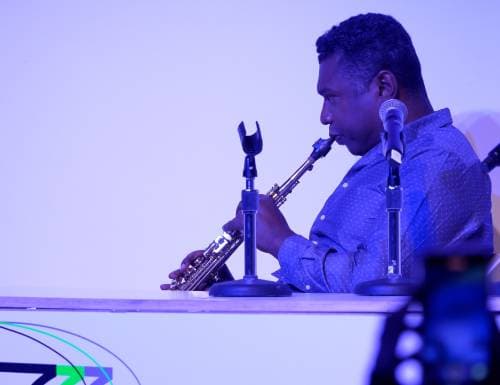
Matteo Loglio is an Interaction Designer
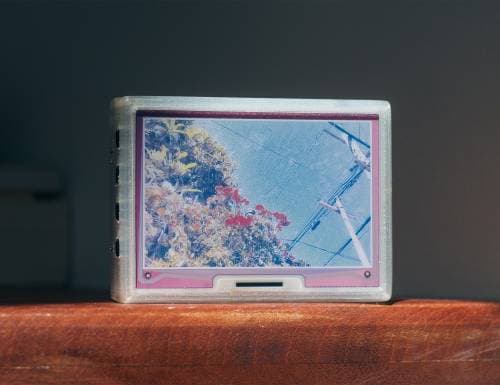
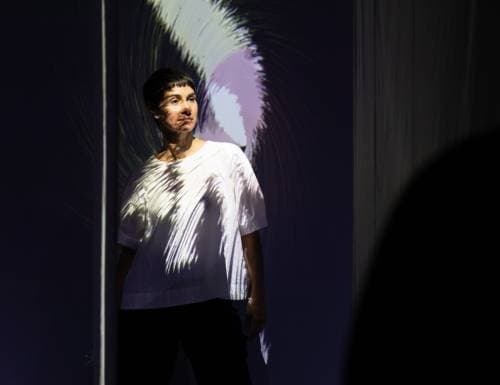
Matteo Loglio is a co-founder at oio, where he makes future everyday products — big, small, often first of their kind.
This interview was conducted by Kristoffer Tjalve on behalf of APOSSIBLE.
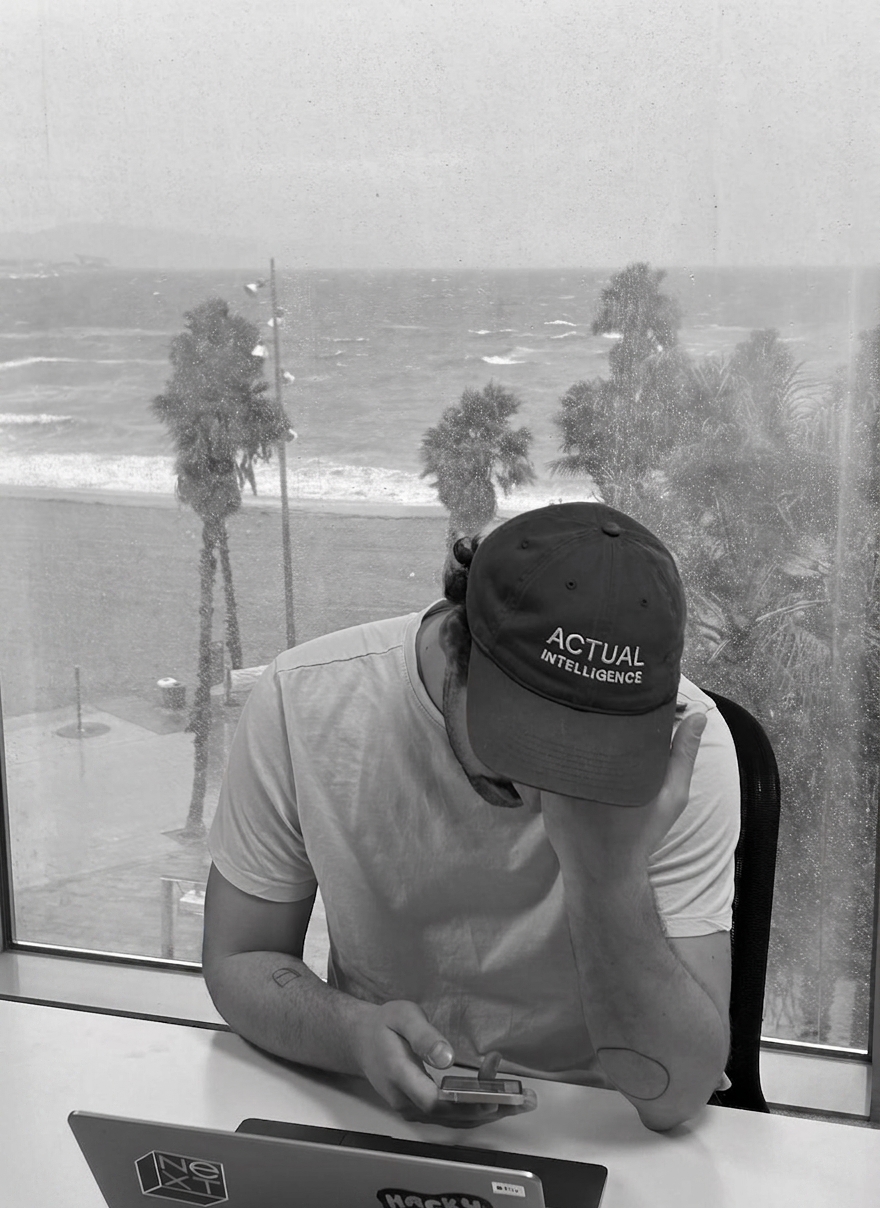
Kristoffer
What is a ritual, practice, or routine in your life that is important for your psychological wellbeing and/or fulfillment? Why?
Matteo
I spend an excessive amount of time curating my music library. I've been building it since the early 2000s with iPods, and never stopped. Never really had a Spotify account (quite proud of it). Now all the music I listen to lives on a Raspberry Pi that my friends and I share, streaming to whatever device we're on. Every day I add music to it, a bit more than I can listen to, and it's very intentional because if I don't add something to the library, I can't listen to it. So if I hear a song on the street that I'd like to add, I note it down and add it when I get a chance.
I like to curate my music library like a garden, because the tracks need to look good and be searchable in the music app, which means you have to add the artist, year, album cover, and all the other details. It’s essentially trimming and polishing the small files on your hard drive, much like a gardener with their plants. I do the same with other digital media like films and books, but the music library is the one I spend the most time on, and I love to look back and see twenty years of music. It's not about having unlimited access to all the music in the world; this is your personal collection, built slowly over time, music that means something to you. Each track reminds me of a time in life. Some of it is mainstream, some of it exists nowhere else: your friend's DJ set from that night in an empty club in 2007, or DIY hardcore compilations from your hometown, impossible-to-find gems. There's something I really value in that, in building something piece by piece over the years.
Kristoffer
What is a human-made creation that brings out the best in you? Why?
Matteo
I love my bicycle. I moved house a few times recently and ended up selling and buying different bikes in the process. I'm not attached to one specific bike, but to the idea of the bicycle itself. I've been riding almost every day since I was a kid, and at this point it's just part of who I am. I move faster, take less time, and feel like I'm genuinely connected to the city. I hear the sounds around me, I really like that. Sometimes when I don't know what to do, I just go for a bike ride and I'm happy.
I'm not really a bike expert, I can barely fix a flat tire. I like them scrappy. The bicycle is exchangeable, fungible, cheap and dirty, and it's political. It's liberation and empowerment to go wherever you wish. No money, just your muscles. You are the limit. My grandfather Renato loved bicycles. In the old days it wasn't a polished thing; it was rough and greasy and mechanical. It's Albert Hofmann. It's the Tour de France in the '60s. Self-driving cars might be the present, but I really hope bicycles will be the future.
Kristoffer
When do you cherish the slow or hard way of doing something? Why?
Matteo
I learned late in life the joy of slowing down, mostly because I also really enjoy making things fast. I suspect it comes from growing up playing video games. I have a soft spot for classic strategy titles like Age of Empires, The Sims, RollerCoaster Tycoon. I still play them, and I honestly think they taught me how to see the world. I look at my own life in third person because of The Sims (or a mental illness? who knows). Either way, I'm always trying to figure out how systems work so I can hack them to be ultra-efficient, ultra-fast. Little machines that run themselves. I tried to apply that to everything, but it didn't really work. Turns out life's not a video game, at least not all of it.
So I learned the hard way how important it is for certain things to run on the lower speed orbits. Things that will take years, but only if you constantly do them for ten minutes every day. Like learning a new language, mastering a tool, or venturing into new coding frameworks. You start knowing it'll take years just to get decent, so you have to be kinder to yourself. You have to accept you suck at it, so you learn to be patient. That’s the hardest part for me: patience. I have this rule now that it’s okay to not see actual results before one year. It’s normal to be completely clueless about something you’re learning. Playing with Tobia, my three-year-old son: there’s no way to change that speed. You move at his pace, or not at all.
Bottom line I don't think slowness is inherently good, or better than speed. I think of them as the natural opposites, entangled in a yin-yang kind of singularity. They are the same thing. The real skill is understanding how different speeds work and adapting to them, even when they're not your natural pace. Once you grasp that, a lot of human behaviour starts to make sense. It's not about physical velocity so much as mental speed, I guess. Kahneman's fast and slow thinking. I think about his work a lot. It really changed how I see the world.
Kristoffer
What is something you appreciate or long for from the past? Why?
Matteo
I miss Flash times. That's where I accidentally started my interaction design path, without even knowing what it was. Flash was an everything-tool: design, animation, web, games, coding, all in one. It was everywhere, and there were no rules. People were just making insane interactive stuff. Entire websites in Flash, totally slow and unusable, and nobody cared. UX did not exist back then, good times. It really defined the language and aesthetics of the internet back then. All those shitty animations, the gerbil in the blender, Pico's School, Yugop, Newgrounds, David Firth (that's how I discovered Aphex Twin, through David Firth's Milkman video), Salad Fingers, the early YouTube subcultures, MSN Messenger.
I think that was like the Woodstock of our generation. We're all nostalgic for the Y2K now, like old hippies. Technology was wild, everything looked wonky and undesigned, buggy, full of malware, slow and pixelated, but there was freedom in it. No online personas, just usernames and profile pictures that were never your actual face. No curation, social media or phones in your pocket. Just chunky Windows PCs full of shitty software. It's hard to describe to someone who wasn't there. It was the right amount of technology. I miss that. And I don't think there'll ever be anything like it again. I feel lucky I got to live through it. Probably the best time humanity's ever had on this planet, honestly.
This is part of our Interview Series. Join our newsletter to receive updates weekly by email.